What the Memo Actually Directs
The memo is one page with five numbered directions. Three shape acquisition most directly; the other two cover force structure and personnel.
First, establish FASCOM. The memo directs the Army Vice Chief of Staff to establish the command. It did not name the command FASCOM would be built from; an Army spokesperson said at the time that specifics on structure, command and mission would be announced later (Military Times, Oct. 13, 2026). On October 13, Gen. Christopher LaNeve, Vice Chief of Staff and Acting Chief of Staff of the Army, announced that he had selected U.S. Army Futures and Concepts Command for redesignation as FASCOM. The Army said a three-star general will lead the command and that it will consolidate the work of the Combat Capabilities Development Command, Medical Research and Development Command, 75th Innovation Command, Joint Modernization Command and Transformation Decision Analysis Center (army.mil, Oct. 13, 2026; Breaking Defense, Oct. 13, 2026). The Army did not name FASCOM's commander in that announcement (DefenseScoop, Oct. 13, 2026). Lt. Gen. Michael McCurry commanded Futures and Concepts Command at the time, and Defense One reported that FASCOM's commander will also become the Army's first PAE for Autonomy (Defense One, Oct. 2026). That dual role is reported, not stated in the memo or the Army releases.
Second, build force structure in at least six formation types. The memo directs the Army G-3/5/7 Force Management Directorate to "expeditiously conduct autonomous force development" to create force structure aligning autonomous capability in at least six formations: aviation, armor, fires, sustainment, engineer and training. This direction has no fiscal-year deadline in the memo. It is a force-design task, not a fielding commitment.
Third, designate a PAE for Autonomy, with a fiscal 2028 priority list. The memo directs the Assistant Secretary of the Army for Acquisition, Logistics and Technology (ASA(ALT)) to designate the PAE, and separately directs the Army Acquisition Executive to prioritize acquisition and fielding of autonomous fires; combat vehicles and watercraft resupply; breaching; reconnaissance, surveillance and target acquisition (RSTA); and manned/unmanned platform collaborative teaming "no later than FY28." That is the deadline that should anchor program planning.
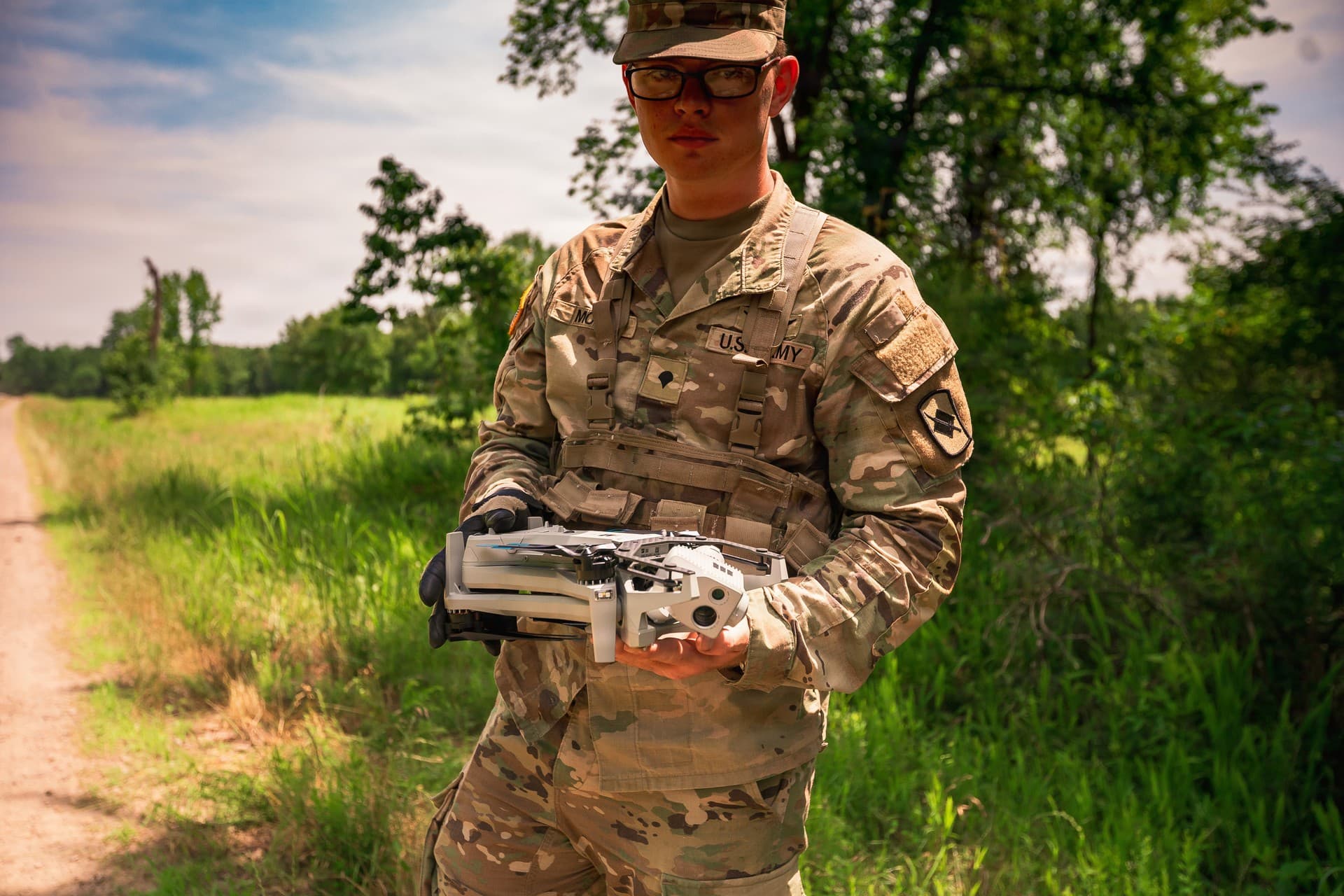
The remaining direction tells the Assistant Secretary of the Army for Manpower and Reserve Affairs to expand authorizations for the 15X Tactical Unmanned Aircraft Systems Specialist and 390A Robotics Technician specialties to all applicable Army units.
Where the PAE Fits in the Current Acquisition Structure
The Army reorganized its weapons buying in 2025 under portfolio acquisition executives, each overseeing a group of related programs; the PAE for Autonomy adds another (Military Times, Oct. 13, 2026). Before the memo, the Army's autonomy acquisition work centered on the Capability Program Executive Office for Mission Autonomy, activated in February 2026 (army.mil, March 12, 2026), which Breaking Defense reported now falls under PAE Layered Protection and Integration (Breaking Defense, Oct. 2, 2026). Neither the memo nor the Army release says whether that office moves under the new PAE, and the Army has not published which programs will transfer.
The practical effect is concentration. "Single acquisition authority" for priority autonomous capability means one executive decides tradeoffs that previously crossed portfolio boundaries: whether an autonomous combat vehicle effort competes for money with a crewed vehicle program, or whether a robotic breaching system is bought as an engineer capability or an autonomy capability. The tradeoff is also concentration. One executive can move faster, but one office also becomes the single point where a requirements dispute, a funding gap or a test failure stalls several efforts at once.
What This Is Not: The Hegseth AutoWarCom
On September 30, 2026, Defense Secretary Pete Hegseth announced a separate initiative: a joint four-star Autonomous Warfare Command (AutoWarCom) with service-like authorities to scale autonomous and robotic capabilities across the military. His Project Agincourt memo, signed the same day, puts the Pentagon's unmanned systems office in charge of groundwork for the command, directs it to work with Congress on the legislation those authorities require, and sets a goal of establishing AutoWarCom by October 1, 2027 (Defense News, Oct. 13, 2026).
FASCOM is not AutoWarCom. FASCOM is an Army command redesignated from an existing Army command. Defense One reported after the October 13 announcement that FASCOM will serve as the Army's component within AutoWarCom, comparable to how Army Cyber Command supports U.S. Cyber Command (Defense One, Oct. 2026). The Telle memo itself does not say how FASCOM fits into the joint structure. For fiscal 2027 and 2028 program planning, the signed memo and the PAE designation matter more than a joint command whose authorities still depend on Congress.
The DODD 3000.09 Overhang
One policy variable remains unresolved: the revision of DoD Directive 3000.09, Autonomy in Weapon Systems.
DODD 3000.09 was issued in November 2012 and most recently updated in January 2023. It does not prohibit lethal autonomous weapon systems. It requires that systems be designed to let commanders and operators exercise "appropriate levels of human judgment over the use of force," requires testing and evaluation, and requires a senior-level review before formal development and again before fielding of covered systems. The Deputy Secretary of Defense may waive that senior review in cases of urgent military need. The directive does not apply to unarmed platforms, unguided munitions, mines, or autonomous systems that are not weapon systems (Congressional Research Service, IF11150, updated March 26, 2026).
National Security Presidential Memorandum 11, signed June 5, 2026, requires the Pentagon to update 3000.09 within 90 days and to review it annually (DefenseScoop, June 15, 2026). That 90-day window closed in early September 2026. A Congressional Research Service insight updated October 5, 2026, still describes the January 2023 version as the most recent update (CRS, IN12669, updated Oct. 5, 2026); we found no publicly released revision as of publication.
The revision matters for FASCOM's priority list because the directive's scope turns on its definition of an autonomous weapon system, one that, once activated, can select and engage targets without further intervention by a human operator. A CSIS brief published June 10, 2026, argues that the revision's practical effect will depend on whether that definition is extended from the munition to the software that selects targets and directs force (CSIS, "Defining Autonomy: Why Software, Not Drones, Will Decide the Next War," June 10, 2026). A narrower or broader definition changes which programs need senior-level review, what test evidence they must produce, and how much schedule margin they need.
Program managers building fiscal 2027 acquisition strategies for systems that may qualify as autonomous weapon systems should track the directive itself, not secondhand descriptions of it. Until a revision is published, the January 2023 version is the public baseline.
What the FY2028 Deadline Implies for Acquisition Timelines
Fiscal 2028 runs from October 1, 2027, through September 30, 2028. Working backward from that window is our analysis, not Army guidance, and each step depends on the program's starting point:
- Funding comes first. The memo does not say how the priorities will be paid for, and the Army told reporters it had no information beyond its release on funding (Military Times, Oct. 13, 2026). Retired Maj. Gen. John Ferrari told Defense One that without reconciliation funding, the effort may wait for the fiscal 2028 budget (Defense One, Oct. 2026). A program with no identified fiscal 2027 money should plan as though meaningful production begins in fiscal 2028, not before.
- Contracting follows the money and the PAE assignment. A competitive award that must deliver hardware inside fiscal 2028 needs its solicitation early enough to absorb source selection, protest risk and production lead time. Programs using existing Other Transaction or production vehicles may move faster, if the vehicle stays with the office that now owns the requirement.
- Type classification and materiel release are separate gates. Army Regulation 700-142, Type Classification, Materiel Release, Fielding, and Transfer, governs the Army's type classification, materiel release and fielding process. Its duration varies by system and risk; program offices should get a realistic schedule from their own materiel release authority rather than assume the PAE will compress it.
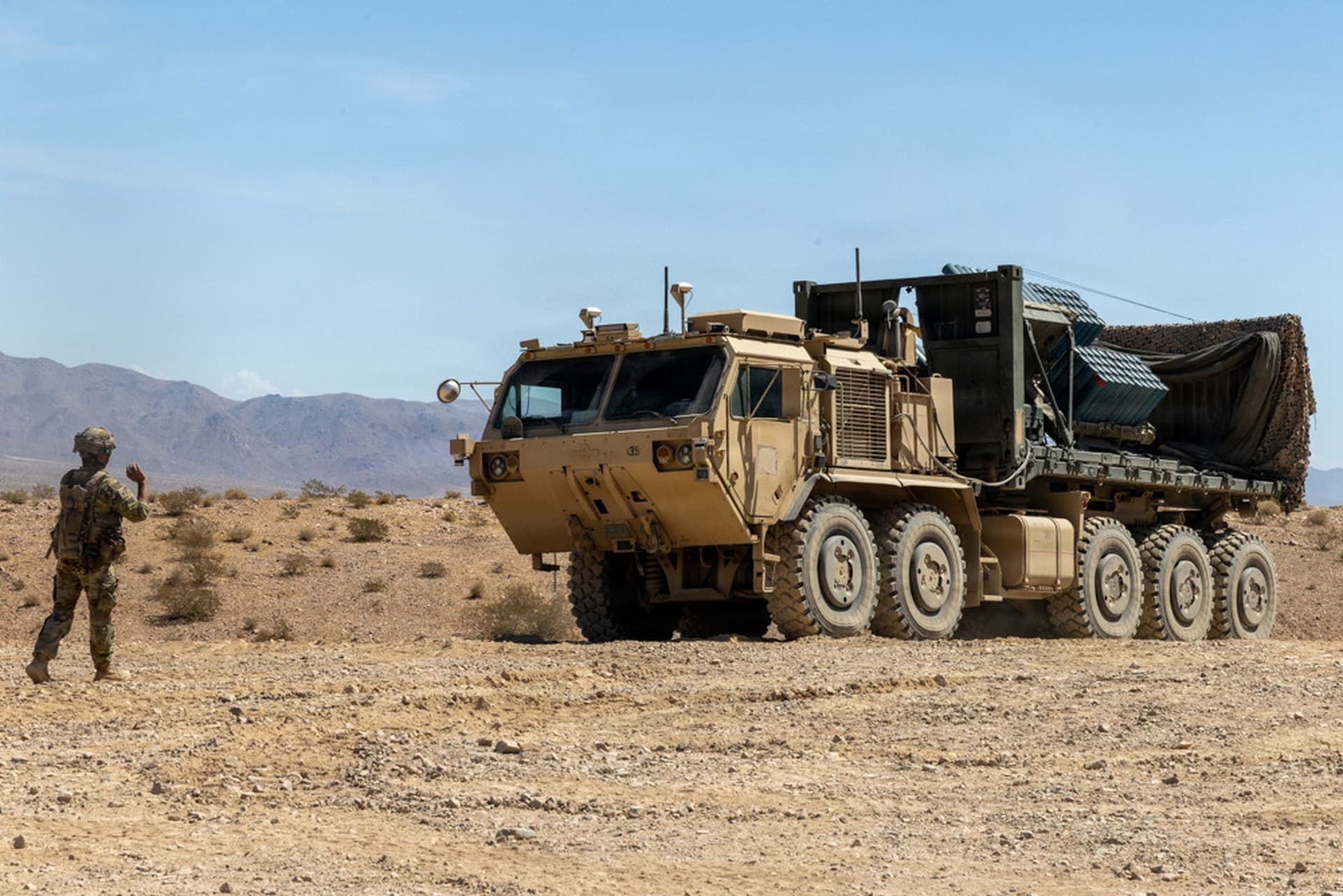
- Integration means formations, not depots. Fielding requires training, maintenance support and doctrine. The Joint Modernization Command, now a FASCOM subordinate command, plans and executes Project Convergence (army.mil FASCOM page). The Army ran the first Project Convergence experiment at Yuma Proving Ground in 2020 (army.mil, June 11, 2021). Project Convergence Capstone 6, at Fort Irwin in July 2026, included an Autonomous Volcano mine-placement system on a Palletized Load System truck (DVIDS, July 24, 2026). Those results inform what "fielded" can mean for an autonomous fires or sustainment system.
- Consolidation reduces contracting points, not documentation. A single PAE does not reduce the requirements, test and safety documentation a major capability needs. A program pursued through an existing portfolio relationship must confirm whether and when that relationship transfers.
Hypothetically, a contractor holding an active Other Transaction agreement for an autonomous ground vehicle under an existing portfolio should determine whether that agreement will be administered under the new PAE, remain where it is, or require a new agreement. That question has no published answer yet. The memo directed the office; program assignments will follow.
The Priority Areas as a Market Signal
The priority areas are not equal in readiness or risk. Three observations follow from the Army's own reporting; the judgments are ours.
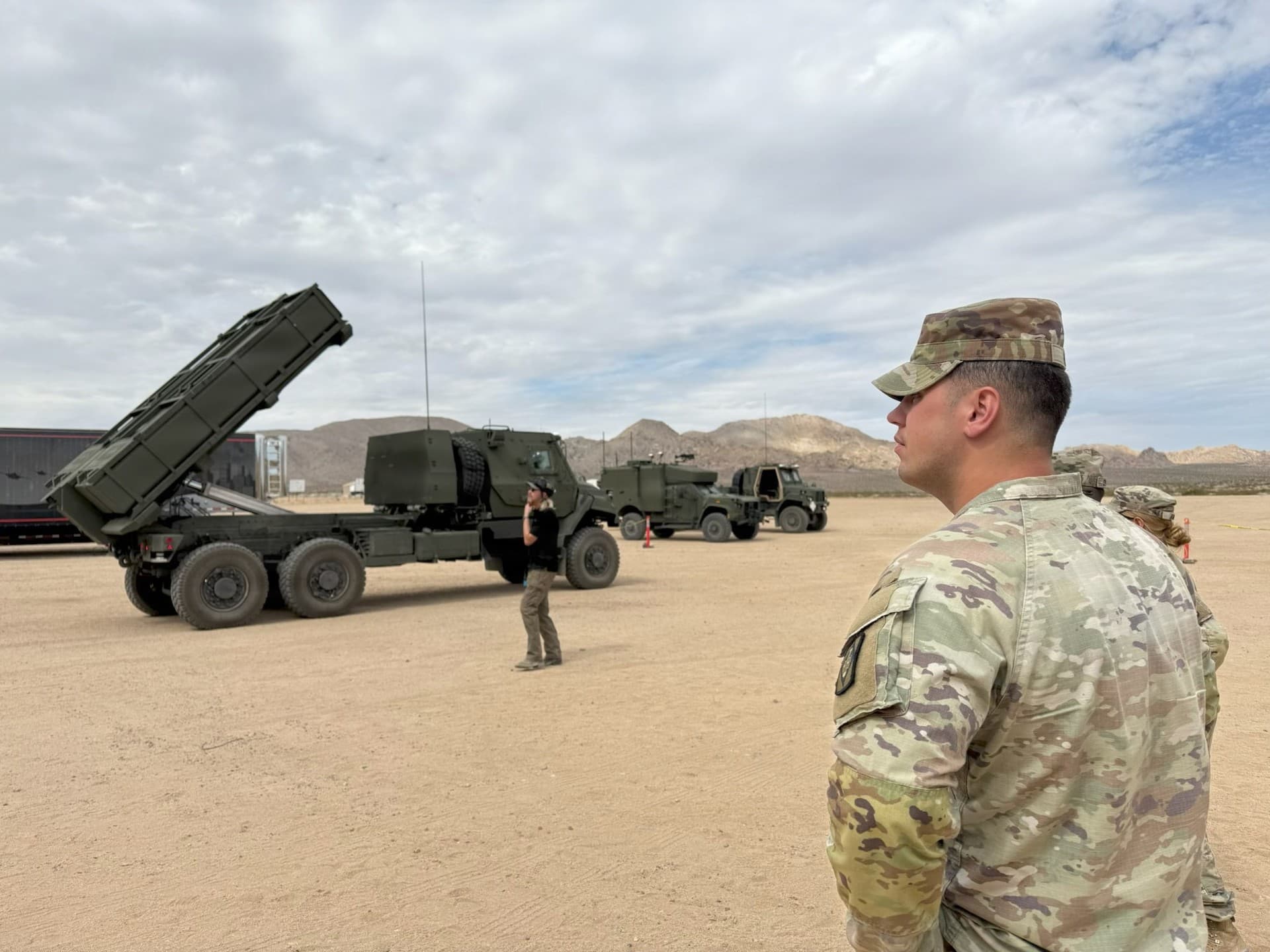
Fires and sustainment have hardware on the range. At Project Convergence Capstone 6, Collins Aerospace personnel prepared a Joint Unmanned Autonomous System Multi-Payload System Command and Control (JUMPS C2) vehicle, which the Army described as the mobile command center for autonomous launchers, during a deep fires demonstration at Fort Irwin on July 17, 2026 (DVIDS, July 17, 2026). The Autonomous Volcano system was experimented with at the same event. The Army's October 13 plan also places an autonomous fires battery and an autonomous watercraft company in I Corps as early experiments (army.mil, Oct. 13, 2026). These areas appear further along the experiment-to-program path than the others.
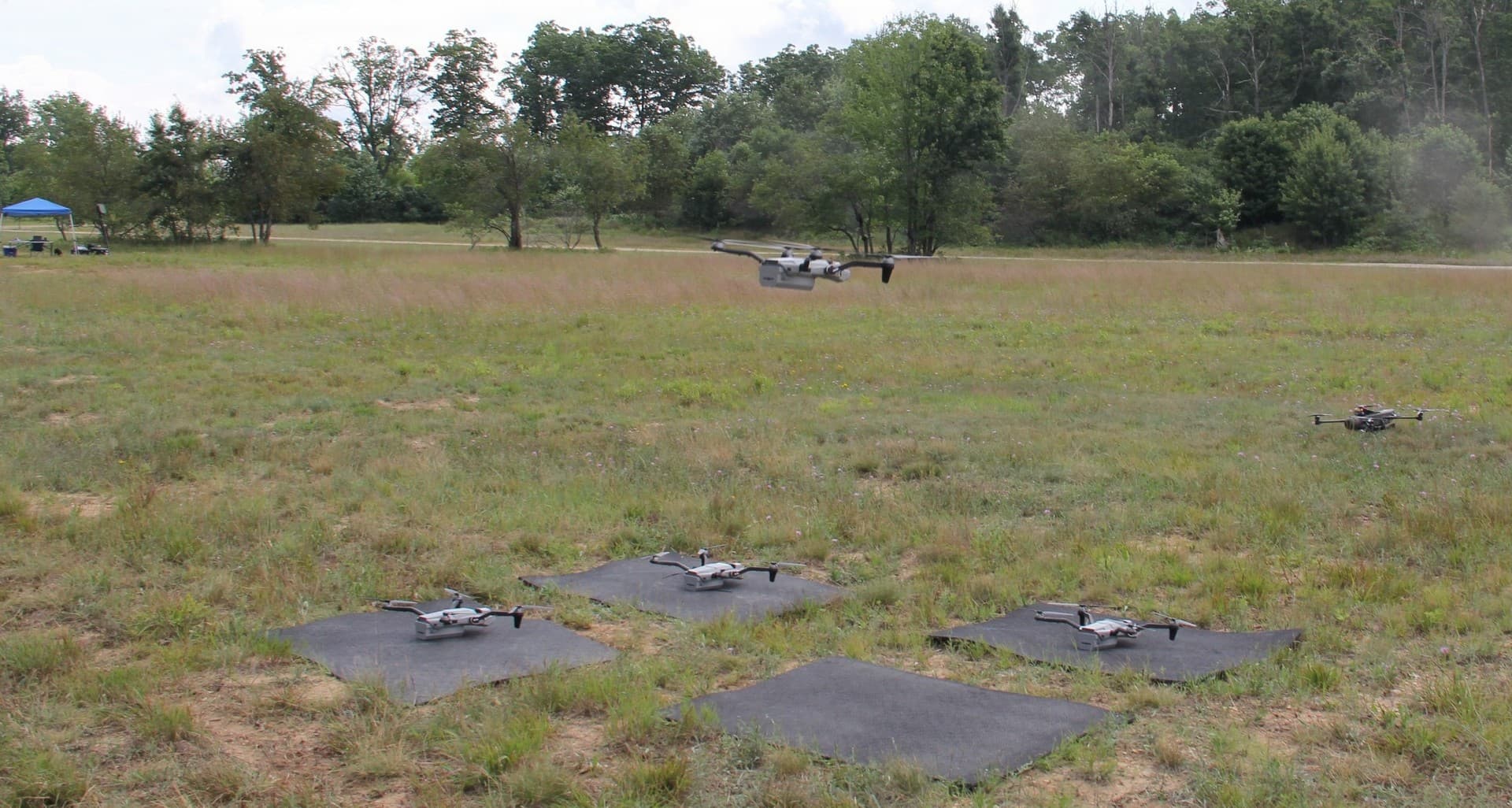
Corps experiments show where demand will form first. Beyond I Corps, the Army plans an autonomous armored reconnaissance company in III Corps, an autonomous breaching company in V Corps, autonomous aerial ISR and lift companies in XVIII Airborne Corps, and paired manned and unmanned rotary-wing aircraft in 8th Army. Vendors should watch which of those experiments validate, because the Army says validated concepts will be scaled.
Training is an underappreciated entry point. Fort Benning's Maneuver Center of Excellence launched the first pilot of its Robotic Autonomous Systems Leader Tactics Course in February 2026, with three pilots slated for fiscal 2026 (army.mil, Feb. 11, 2026). Training is one of the memo's six formation types. Our judgment is that systems used in training carry lower operational risk and can build the user familiarity that later operational fielding needs.
Compliance burden will concentrate where systems select and engage targets. Breaching is operationally hard because robots work ahead of dismounted forces in contested ground. The DODD 3000.09 burden, however, falls on weapon systems that select and engage targets; the current directive excludes unarmed platforms and mines. Our assessment is that autonomous fires and armed combat vehicles are more likely than many breaching or resupply systems to need senior-level review, and that a definitional change in the revised directive could move that line in either direction. Programs should get a written scoping determination early rather than assume where they fall.
Questions to Settle Before the PAE Assigns Programs
- Which memo priority area does the system serve: fires, combat vehicles and watercraft resupply, breaching, RSTA, or manned/unmanned teaming?
- Which portfolio executive owns the requirement today, and has the Army said whether it moves to the PAE for Autonomy?
- Does the system select and engage targets without further operator intervention, and has legal or policy staff documented whether DODD 3000.09 applies?
- What test evidence would a senior-level review need, and when is that evidence scheduled?
- Is fiscal 2027 money identified, or does the schedule assume fiscal 2028 funds?
- Which corps experiment or training pilot could provide user feedback before a production decision?
The alternative to repositioning early is to wait for the PAE's program list. That makes sense for a program with stable funding and a portfolio that is unlikely to move. It is riskier for programs whose requirements straddle two portfolios, because those are the efforts the new single authority is most likely to restructure.
Spartan X's AI governance and risk framework work, and the decision-verification design in its Archeon architecture, address the question this reorganization puts in front of autonomy programs: how to show that a system preserves appropriate human judgment and accountability while still moving at the pace a fiscal 2028 deadline demands. The 3000.09 scoping, test-evidence planning and documentation a new PAE will expect are where that discipline matters most.
Sources and further reading
- Army Autonomous Initiatives memorandum — Acting Secretary of the Army, Oct. 1, 2026
- Army announces Futures and Autonomous Systems Command — Army.mil, Oct. 2, 2026
- Future Focused: Vice Chief of Staff of the Army Details Army Autonomy Advancements — Army.mil, Oct. 13, 2026
- Army to establish new autonomy command, acquisition executive — Breaking Defense, Oct. 2, 2026
- LaNeve redesignates Army's Futures and Concepts Command as new FASCOM autonomy command — Breaking Defense, Oct. 13, 2026
- US Army to stand up command for unmanned and autonomous warfare — Military Times, Oct. 13, 2026
- Three-star will head Army's new autonomy command — DefenseScoop, Oct. 13, 2026
- Army converts Futures and Concepts Command to Futures and Autonomy Command — Defense One, Oct. 2026
- Army's new command plans to streamline autonomous warfare acquisition — Defense One, Oct. 2026
- Senator questions Pentagon's plan to revise autonomous weapons policy — DefenseScoop, June 15, 2026
- Defense Primer: U.S. Policy on Lethal Autonomous Weapon Systems — Congressional Research Service, IF11150
- Pentagon-Anthropic Dispute over Autonomous Weapon Systems — Congressional Research Service, IN12669
- Defining Autonomy: Why Software, Not Drones, Will Decide the Next War — CSIS, June 10, 2026
- 2-18 FA Battalion, 75th FA Brigade test next-generation robotic launchers at Fort Irwin — DVIDS, July 17, 2026
- Fort Benning trains Army leaders to integrate robotic and autonomous systems in combat — Army.mil, Feb. 11, 2026