What the budget actually funds
MDA's April 2026 budget justification places Maverick within its Low-Cost Defeat initiative. The FY2027 plan calls for an East Coast flight test using multiple sensor types to track and engage a hypersonic glide vehicle. A tactical battle manager would use edge processing and data fusion to generate engagement-quality information for engage-on-remote.
The associated Advanced Technology Development project requests $460.222 million, covering Maverick, Low-Cost Interceptor work and other activities. That figure is neither a Maverick-only allocation nor evidence of money already spent. The budget describes planned electronic protection and cyber demonstrations alongside the sensor and battle-management work.
The public description is an integration objective. It does not identify every participating sensor, establish a completed intercept or make the entire future operational architecture visible. Those distinctions matter when translating a demonstration plan into procurement expectations.
A remote track has to arrive with meaning
Engage-on-remote allows an engagement to use suitable targeting information from sensors external to the shooter. This can extend the usefulness of weapons beyond the coverage of their own local sensing. For maneuvering threats, earlier and more persistent tracking can be valuable, but the available time depends on geometry, altitude, trajectory and system performance.
Transport and fusion both matter. A precise track arriving late can be unusable; a fast message with ambiguous identification or understated uncertainty can be dangerous. Integration needs to preserve timestamps, coordinate references, sensor calibration, uncertainty and the history of track associations.
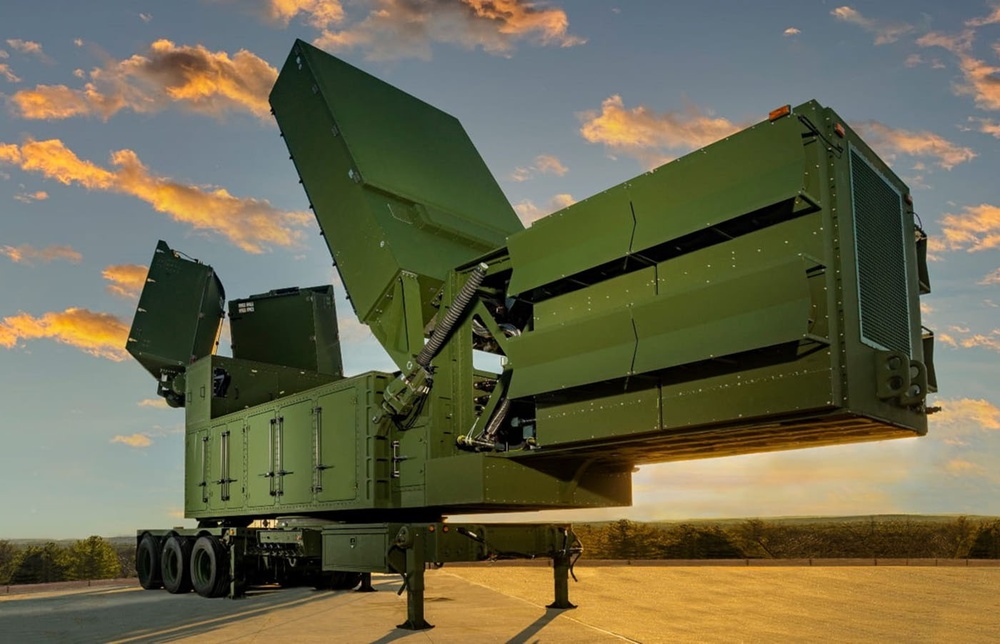
Different sensor types observe different properties. Infrared and radar measurements may differ in coverage, revisit rate, resolution and error characteristics. HBTSS, ground and sea-based radars, and airborne sensors illustrate the range of possible inputs to a layered architecture; that list should not be read as a confirmed Maverick test roster.
Useful design questions include:
- How does the system identify duplicate observations and avoid creating separate tracks for one object?
- What happens when sensors disagree or a normally reliable feed becomes stale?
- Does a downstream user receive the uncertainty needed for its decision?
- How are latency, message loss and interrupted connectivity reflected in track validity?
- Can evaluators trace an engagement recommendation back to its contributing measurements?
Automation can help perform these tasks at speed. It does not establish that every fusion algorithm is machine learning, or that an AI model must make the engagement decision. The appropriate implementation depends on the function and the evidence supporting it.
Verify the decision chain, including its people
Operators need a usable picture of system status and limits. An interface that conceals disagreement or stale data can create unwarranted confidence even when individual components are performing as designed. Decision authority, supervision and intervention procedures must match applicable policy and the actual operational concept.
The 2023 version of DoDD 3000.09 requires appropriate human judgment for covered autonomous weapon systems. That is more specific than assuming every engagement has an identical human-in-the-loop arrangement. Programs must establish the requirements that apply to their system and demonstrate how the design supports them.
For test planning, preserve enough evidence to distinguish a sensing error from a fusion error, a transport problem, a weapon limitation or a threat maneuver outside the tested conditions. Independent evaluation should challenge shared assumptions; agreement between two models trained on similar data is insufficient by itself.
- Define measurable outcomes for each handoff and for the complete engagement.
- Record the tested configuration, time alignment and data provenance.
- Exercise disagreement, missing information and degraded communications.
- Observe how operators understand status and exercise their assigned authority.
- Compare observed performance with the predicted envelope and carry unresolved limits into the next test.
Why an interim demonstration matters
The longer-term Glide Phase Interceptor effort addresses interception during a hypersonic vehicle's glide phase. Section 1666 of the FY2024 NDAA directed programs to achieve initial capability by December 31, 2029 and full capability by December 31, 2032. Statutory targets should be distinguished from the program's current delivery forecast and demonstrated readiness.
Maverick provides an earlier opportunity to learn about the supporting architecture. Hardware delivery and operational integration are related but different tasks: doctrine, interfaces, training and confidence in track quality also need development. Those lessons can remain valuable even if a particular test configuration does not become the fielded solution.
For industry, the opportunity includes battle-management software, sensor interfaces, test infrastructure and supportable integration. Open interfaces can reduce the work of adding a feed, but access rights, documentation and acceptance evidence still determine whether another supplier can actually integrate it. A credible proposal should explain the useful operating envelope and the evidence needed to expand it.
Sources and further reading
- MDA FY2027 budget, Advanced Research project MD25, printed pages 9 and 13–14
- FY2024 NDAA, Section 1666
- DoDD 3000.09, January 2023 version
Spartan X’s engineering, AI and cybersecurity work addresses the interfaces and evidence behind this kind of integration: helping programs connect sensor information, decision support and operational requirements into a system that can be meaningfully tested.