On April 3, 2026, the White House released a fiscal year 2027 defense budget request of $1.5 trillion — the largest proposed defense spending plan in American history, representing a 44 percent increase over the FY2026 appropriation. Buried inside that top-line figure, but unmistakable to anyone tracking the trajectory of defense technology investment, is a single number: $54.6 billion requested for the Defense Autonomous Warfare Group. The DAWG received $225 million in FY2026, the year of its establishment. The FY2027 proposal represents a 243-fold year-over-year increase. By any historical standard, that is not incremental scaling. It is a structural commitment — the kind of budget signal that reorganizes industrial priorities, reshapes acquisition timelines, and redefines what it means to be a relevant defense technology company for the next decade.
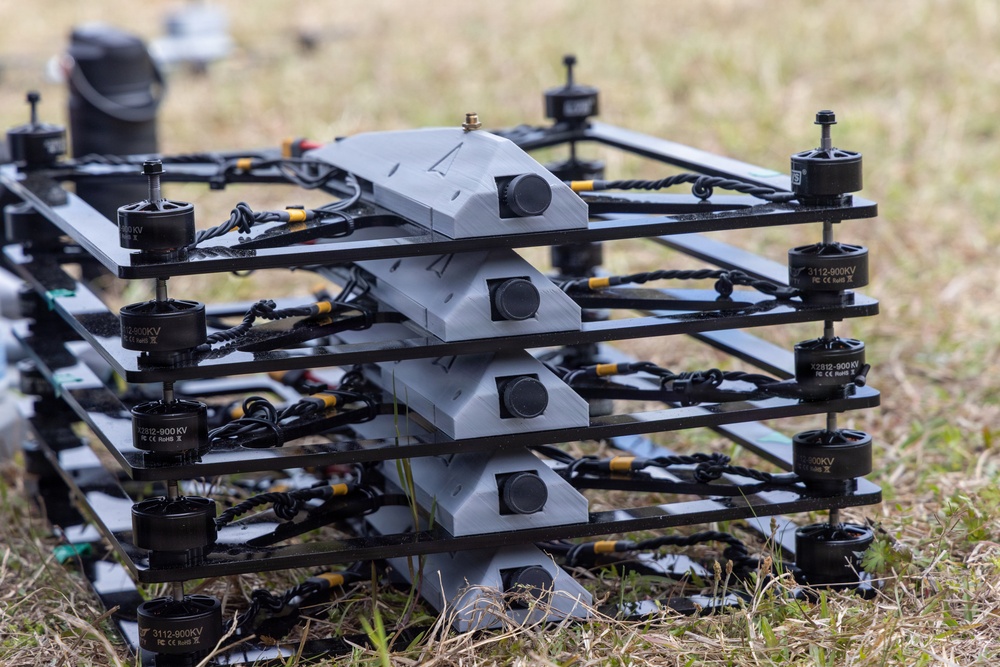
The DAWG was established quietly within the Pentagon in late 2025 with a mandate that deliberately distinguishes it from the Replicator initiative it partly grew out of. Where Replicator and the Drone Dominance program focus on Group 1 first-person-view drones and small attritable systems, the DAWG's scope extends to larger one-way attack platforms, small unmanned surface vessels, and the agentic AI infrastructure that enables battle management and kill chain execution at machine speed. The institutional logic is clear: Replicator demonstrated that the United States could field low-cost autonomous systems at volume; the DAWG is designed to ensure that capability becomes a permanent feature of the joint force rather than a time-limited program of record. The $54.6 billion request is the budget mechanism for that permanence.
What 200,000 Systems Demands from the Industrial Base
The Drone Dominance program, running in parallel with the DAWG's larger-platform mandate, has set a procurement target of more than 200,000 autonomous systems by 2027. Phase I vendors were identified in February 2026, and the program's four-phase acquisition structure carries a cumulative budget signal of approximately $1.1 billion — a figure that, while significant, understates the downstream industrial demand generated by fielding autonomous systems at this scale. The sustainment, software update, and logistics tail of 200,000 platforms is a larger and longer-duration program than the initial procurement contract. Companies entering the Drone Dominance pipeline are not signing a single contract; they are positioning for multi-year production relationships in a market the FY2027 budget has now confirmed is permanent.
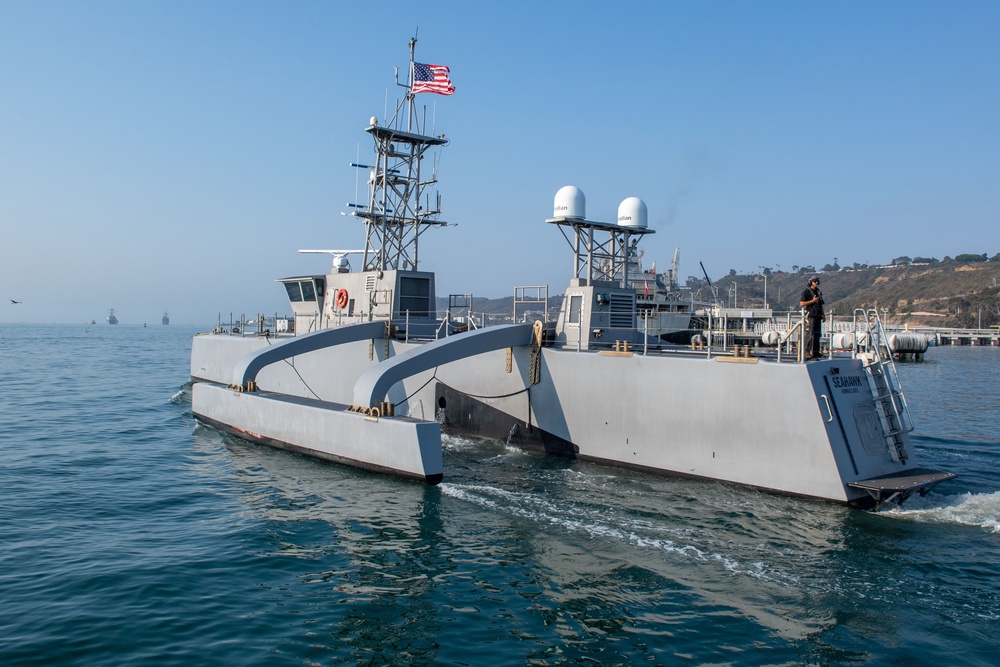
The production infrastructure requirements are substantial. Saronic Technologies, which closed a $1.75 billion Series D in March 2026 and reached a $9.25 billion valuation, is building Port Alpha — a next-generation autonomous surface vessel shipyard in Texas — as a direct response to Navy demand signals. Blue Water Autonomy broke ground on its Liberty-class 190-foot autonomous surface vessel at Conrad Shipyard in Louisiana the same month. HII and Shield AI completed the first integrated autonomy test aboard the ROMULUS USV in early 2026. The capital formation and facility investment occurring across the autonomous maritime sector in the first quarter of 2026 reflects a market reading the DAWG budget signal accurately: the industrial base needs to be built now, at scale, to meet a procurement curve that starts steep and stays elevated.
The Software and Compliance Layer That Determines Who Participates
Hardware capacity is necessary but not sufficient. The DAWG's acquisition model, consistent with the January 2026 DoD AI Strategy and its data sharing mandates, requires that platforms entering the autonomous warfare ecosystem comply with Modular Open Systems Architecture standards and expose standardized interfaces for mission tasking, telemetry, and payload integration under the Open Mission Systems and Universal Command and Control Interface frameworks. These are not optional certifications for vendors willing to accept a compliance premium. They are entry requirements. A platform that cannot be managed through the joint C2 infrastructure, cannot receive over-the-air mission updates through a standardized API, or cannot expose its autonomy stack for third-party integration is not eligible for the DAWG procurement pipeline regardless of its performance in isolated testing.
The software supply chain requirements compound the open architecture mandate. CMMC Level 2 and Level 3 certifications apply to the full stack — not just administrative IT systems but the embedded firmware, autonomy models, and sensor fusion software resident on each platform. The Zero Trust Strategy 2.0 requirement to extend identity verification and continuous authentication to operational technology means that autonomous platforms operating within DAWG-governed missions must be enrolled in the same identity and access management architecture as the command and control nodes directing them. For defense technology companies that built platforms assuming a permissive software environment, this compliance posture is a non-trivial engineering and governance undertaking. For companies that designed open, auditable, MOSA-compliant architectures from the outset, it is the competitive differentiator the market is now willing to reward at scale.
The Generational Context
The $54.6 billion DAWG request, set against the $1.5 trillion total FY2027 defense budget, represents a defense investment trajectory that has no modern precedent outside the Cold War nuclear build-up. The difference is that the Cold War build-out concentrated capability in a small number of exquisite, expensive platforms. The autonomous warfare build-out is explicitly designed to distribute capability across thousands of low-cost, attritable systems operating under AI-enabled coordination — a fundamentally different industrial model that advantages agile manufacturing, software-defined platforms, and edge AI architectures over prime contractor systems integration. The defense technology companies positioned to capture the DAWG-driven demand are those that can produce at volume, update software at commercial speed, and demonstrate edge autonomy that survives the contested electromagnetic environment the Swarm Forge Crucible is designed to replicate. The budget has been proposed. The timeline is set. The build-out of America's machine force is now a line item.